Test Automation Snake Oil
This is from 1999 and yet is still so relevant to challenges we still face with Test Automation. Go read it. It's 6 pages and doesn't need a review so instead below are some thoughts that I had from reading it. Surprisingly little of it has dated aside from probably an advance in tooling allowing for more tasks to be automated. This is still evolving today and hopefully I can get a post up about the field of cognitive or visual automated testing soon.
I have a little experience in a QA role. It was the start of my career and it was a mixture of manual and automated testing. I even ended up developing an internal automation framework when I had just graduated so I do have an interesting in Software Testing but do not in any way claim to be an expert in the field. I think Quality is the responsibility of everyone on the team especially when you have a setup, like we do in work, that places the QA Engineer/Software Engineer in Test within a small feature team. I feel that in a role in Software Management it's a massive part of the role to still be a big ambassador for Quality even if you aren't in affecting the code on a daily basis.
I think the drive to automate all the things is coming from a really good place but do worry sometimes that we charge head first into battle that it's really easy to end up in a position with a mass of tests which make it a lot more difficult to evolve our application and release features than they should. That's before you get into the challenges associated with maintaining all the LOC that you've just generated to create those tests or the terrible fear of over testing because sometimes it gets confusing between what you can test and what you should test.
So when you read that in 1999, "In fact, in my experience, they fail more often, mainly because most organizations don't apply the same care and professionalism to their testware
as they do to their shipping products." shouldn't it hurt and surprise us that sometimes we're still making those mistakes. When you read that Boreland in the 90's (shout out to the Silk Test massive)
correlated if bugs were found by automated or manual testing it makes you wonder if we are still even doing that as an industry now. Can we point at something and state that we know
how well the automated tests are performing?
In a world of flaky tests or tests which need changed with every single code check-in (those not impacting external interfaces included) shouldn't we be looking critically again at R.O.I on each automation endeavour in the same way we should do with every user story we write? Does having a suite of tests even stop us from doing the appropriate manual runs in that area? Does a false sense of security exist?
The most important thing that test automation is meant to do is free the resources you have from doing mundane repeated work and using their brain and insight to find the unexpected. The big concern should be if we set up our test engineers to spend all their time writing automated tests are we really setting them up for success? I think it's only fitting to leave with one more quote from the article "That's why I recommend treating test automation as one part of a multifaceted pursuit of an excellent test strategy, rather than an activity that dominates the process, or stands on it own." That's something I think is even more important today than they day it was written.
Monday, 28 March 2016

Sunday, 27 March 2016
Your Code As A Crime Scene
Just finished reading this by Adam Tornhill and wanted to share a quick review of it
Really interesting book. Part theory part hands on experience and as such it's a different style to a lot of programming books which I think keeps you engaged after the enticing introduction which tells you that the same techniques used to track serial killers can help you find problems in your software. It's a premise like that which get's you interested.
Sometimes it feels like a bit of a gimmick. I don't feel like often the forensic techniques are anything more than a touch point that helps you understand the premise of some pretty nifty statistical analysis through your code and particularly your source code history. We see the map that indicates where jack the ripper may have lived but then our own code map seems a bit more straightforward. It still acts as a nice narrative and vehicle for getting the concepts across but I don't feel I'm any closer to starting my private detective business unfortunately.
Section 1 starts with the theory to help you understand where the bottlenecks may be in your code and in particular how to tell from how a code evolves and grows how it may have suffered from growing pains. Essentially V1.0 if your code is normally written by a smaller group with a singular purpose but as time goes on more people come in to the project and that can very easily lead to some sprawl of the code base and differing standards and implementation styles so it's great if you can try and identify those areas because they may need a proper ground up redesign.
This is done through a couple of different mechanisms one of which is mining the richness of information in your git history. The tooling provided will allow you to find code which is complex or could be home to many errors another way of doing that which has been suggested by colleagues was just to keep an eye out for anywhere I had made commits....dickheads.
So while you may not be pounding the beat whilst looking for clues as to where the issues are, what you get instead is some great heuristics and insights. A lot of them that I have no experience of like indentation-based complexity for example which indicates you can judge complexity of code visually from how it's indented. All of these techniques are based on academic finding and Adam acts almost as a conduit bringing these to industry to say hey this could be useful to you today don't want for it to become a fancy start-up with a .io address.
We also get to have worked examples both on the code base that's used to analyse code bases (how meta ;) ) to NHibernate and others. It's brilliant to get this level of hands on work in a book which could easily disappear into theory and intellectual grandstanding. It makes the examples feel like something you can actually aspire to and all in all this made me interested in checking out Microsoft R (pretty sure there is a free EdX course on it) and checking out the world of data analysis.
Section 2 talks at length about automated testing and also some of the shortcomings you can have with the implementation when you have an 'extensive' set of tests that are too close to the code and counter-intuitively slow down progress you can make.
I found the chapter on this to be probably the most interesting and thought provoking of the book. It's not often a developer will talk about writing tests and even less want to draw attention to the tests they've written but this is a frank discussion about how the best intentions around testing can end up weighing you down because the same discipline and thought processes we bring to the application code isn't present often in the test code.
Section 3 is on social psychology and so its very different to what has come before. It's less actionable (to start but does come back around) and I guess more of intellectual value. That's not to say there isn't touch points of real world but initially it's removed from concious thoughts etc. Interesting points include discussing why Brooks law on increasing team size doesn't fit for open source projects.
This feels like a manual for sitting down and working out how to mine the information rich source that is in your source code history. As an industry which has such a steely focus on big data etc we often seem wary to turn the microscope around to look at ourselves and see what can be learned about how we work and what makes for successful software delivery. Though the techniques may not stay the same I truly believe this book could make a big difference to how software gets delivered. Actionable metrics for software development is such a bloody minefield that it's hard not to be really floored when someone can not only show you actionable and scientifically backed ones but also make it an interesting read.
I'm going to make a concious effort to use the tools listed in the book and see what information we can bring out. We are in a pretty distributed project set-up (which I guess is becoming the norm via micro-services) so sometimes I think some of our temporal dependencies will be lost because it's across multiple git repos but I still think a lot of what is discussed and reasoned about here will be useful. When you have a book like this which isn't about a technology explicitly or about a class of problem I think there's no higher praise than to say it's thought provoking and has driven me to want to implement what's talked about as soon as I can.
Well worth a read!
Wednesday, 17 February 2016
CodeSchool - Javascript Road Trip
I'm a javascript noob. I have, of course, like most developers changed javascript and written something approximately like Javascript. Like most developers I've done that really badly but with a level of confidence and bluffing that I may have gotten away with it. So when I saw the Javascript track on codeschool.com and in particular the "JavaScript Road Trip" I thought hey maybe this is point that I should sit down and try and learn it.
Starting out on the Road Trup?
The video, and therefore the first segment of the course, starts
with our intrepid teacher walking along some railroad tracks.
I think this is
because we're going on a journey but it may also be because he's hunting the
most deadly game of all...bindle swinging hobos. He has running shoes on which
supports this and a bloodlust in his eyes that is quite hard to escape.
Ok no it was a
journey metaphor. For now anyway. We get a lovely little intro with a strong
javascript song. I'm fully into this now.
The first part of the road trip is a free course but when this says the basics of Javascript they really mean it. Truth be told most of it is the basics of programming as very little of it feels javascript specific. Some of it is strongly computer science 101 so if you are an experienced developer you may find this slightly hard going to sit through initially. So the free part is probably of limited value to experienced developers but don't let that put you off the overall Javascript course.
So do I need to take a U-Turn?
NO! Definitely not. Yes the first segment does start at a pretty basic level but It does however develop over the rest of the roadtrip (Not free) and it really does move it along at a good pace. These 3 module that make up the roadtrup are the building blocks for more specialized courses (Angular/Node/Ember/Backbone) later on but they really do help as they touch on functions, closures, protoypes and a lot of the central concepts you need if you want to get into Node etc.
I've made some further progress along the overall syllabus and can say the best practices course is well worth a look. It talks about performance, ternary operators and other bits.
Is it worth it?
Definitely worth
dipping your toe into. Which I think could also be an incredibly strong Tinder
bio so feel free to use that if you so desire.
It is short but
peppy which is how the police normally describe me in their records.
The presenter kind
of walks that line of being cheesy and earnest in a nice way. It kind of reminds me of Head First style of
books a little. It's informal and relaxed but the content is absolutely sound.
I think Jason Milhouse (https://twitter.com/ItsThrillhouse) does a really good job all round
but I've found it hard recently to shake the feeling that he may be a character
played by Michael Ian Black. IN A GOOD WAY.
The best bit here is
and I assume it's common across all courses is the ability to do stuff in an
interactive console as worked examples.
This is obviously the code school mantra of learning by doing and I think it's
really nice.
Btw first time using
code school and the interfaces with challenges etc is really nice. I think I
might just need to find another topic, I'll be continuing on the JS journey
(because of the theme song mainly) as it does stop at cultural hotspots like
Angular and Node on the way. Also I am sort of sure there will be some Hard
Target style hobo hunting soon.
I think the overall course offered here is a great way to build or improve Javascript knowledge. You finish the roadtrip feeling a lot more comfortable with the whole paradigm and ready to get into the specialized courses that allow you to play with the cool frameworks.
I know a lot of people have one eye on improving their Javascript knowledge and I think this course as part of the larger syllabus at codeschool is a great way to do that.
I give this course the golden bindle.
Pluralsight Course - Yeoman Fundamentals
So as one of my New Year Resolutions I set myself the target of taking 12 online courses this year.
The first course I
took is quite a short one. It's a good introduction to Yeoman. I found it
through an email shot from Plurasight about new courses recently. It wasn't a
technology that I was familiar with so it piqued my interest.
What is it?
Yeoman( http://yeoman.io/) is an application that allows
you to build project scaffolding templates so you can take the sting out of
spinning up new projects. It's installable as a npm package and getting started
is quick
Where would I use it?
It is deliberately
technology agnostic. Even though it is a Node based application this isn't only
for starting new node applications. You can find generators for most
technologies. That’s a really nice touch because if you're starting with a new
technology it might be useful to leverage some tribal knowledge from the
community to get started up in a common configuration.
If you find yourself
spending a lot of time just ramping up a project this might be a good tool for
you.
This course sets out
to guide you on the path to creating your own customer generator. There are a
lot of community built generators out there so if you think you would rather
just be a client maybe you don't need the course as there's probably enough in
the documentation
What's the barrier
to entry?
JS knowledge and Node experience isn't NEEDED to follow it but definitely would help. I think though the more you know the easier it's going to be to follow. I did end up deciding to not follow along but instead just watch the screen cast.
Is the course easy
to follow?
I found the course
very easy to get started on.
Steve Michelotti (https://twitter.com/smichelotti) was
a good guide on this. He's very clear with everything he explains. He brings
you through static files to using EJS templates. I think by the end of this you
feel confident enough at least embarking on creating a generator for real.
I mentioned before
that if you aren't planning on building a custom generator then maybe the
course is slight overkill. Whilst that's true I personally found it useful to
see some of the inner workings and get a little bit deeper with how it works.
The one negative I
would say, and it's my own fault, is I'm actually not that au fait with the
whole Node ecosystem and I found myself pausing to go WHATS THAT or WHAT a lot.
It got the the point I stopped trying to follow along with my own version and just
watched what was happening as I felt I really needed to focus. For others with
experience of those tools etc I think it will be
Yeoman also offer
their own codelab tutorial on building an application with a generator so more using yeoman than building with it. It's expected to take an hour so
would be a little shorter and may be a good free alternative
How I may use it in the future :
So initially I
thought this is maybe not going to have a practical use for me because I'm not
in a front end shop doing lots of new custom websites/projects. Then it dawned
on me (and not surprisingly it had already occurred to everyone who ever used
Yeoman before) that this fits perfectly in a Microservices environment too.
If you have a
preferred structure of projects then creating a yeoman Generator just makes
sense. The cost investment isn't huge as there' s a lot of very good starting
points already. It's great to get everyone starting off on the right foot.
Would I recommend it?
If you have access to pluralsight then definitely. It's a small course at a good pace so well worth a visit. Failing that the free codelab tutorial looks good for learning how to use yeoman and the wealth of generators currently out there.
Monday, 18 January 2016
Book Review : Intercom on Product Management
Intercom on Product Management
So this is a book I picked from Mathias Meyers 2015 Reading List, which is a fantastic resource for anyone who is wanting to find some inspiration on some books to read. It's a mixture of technical software books and also fiction that he read. This one really stood out to me, interesting topic and a very interesting source. Intercom are a very interesting company with a great product, they have offices in Dublin and a very active blog which is a good read so this definitely grabbed my attention.
Also its FREE, hella free, and that's pretty awesome. It's 60 pages as well so it's not a huge investment of time either so I think it's a great one to pick up. So go do that
I'm not a product manager but in a company who is making the transition to a product company. Whilst I'm not a product manager I feel an attachment to our product and what we offer. I think that's pretty common with a lot of Engineers and most of us will be engaging in conversations with your product manager a lot. You should be. You are immersed in the product a lot of the time so in some ways you could be one of the more prolific users. I think as a software developer this is a very valuable read and really nice to be able to try and transplant your view on software deliver to that of your colleague in a different role. One of the really important pieces about being in a cross-functional team is understanding everyone's goals.
It's an interesting place to be somewhere that's gone from a custom software shop to a product company as a lot of the thoughts and documents (like this one) are from companies that started off as a product company. With that in mind I don't think it's always relevant to the day to day challenges we see but this book does a really good job of trying to lift itself up and talk in general terms about trends and principals which is always the most useful.
I won't go into too much detail. It's a short book but one that is focussed and I think to me there are a couple of big takeaways
Engage with your Customer
This is the number one take away and from a company that has their business based around this concept I don't think that's a surprise but it's one that makes perfect sense.
To me, one of the biggest trends of last year was companies talking about their A/B testing and it's infrastructure. LinkedIn had a number of posts on their blog about it and I think monitoring behaviour and attempting to gain insights is a huge thing at the minute. Intercom certainly don't speak against that practice but also talk about direct customer engagement too.
Find out what people are using. Use that to drive your roadmap. Let the numbers guide you but don't be a slave to them. They had a blog post on that topic as well. I think the biggest thing to me is if you have data it should be shared or available to cross functional team.
Be Ruthless about what's valuable
Couple of quotes that really stuck out for me
There is no pride in having a “big” product with lots of features, only a highly engaged one. The more surface area your product has, the more important it is that you chase engagement and learn from your mistakes
and
If you want a well defined product, you must be comfortable killing features.
The concept of killing features and constantly interrogating the value delivered opens up an avenue of work that's normally removed from the development team. We're closest to the release of a new feature but the care and feeding of those features or more the choice of which to feed is probably not part of our day to day.
Removing features from software sounds so counter-intuitive. We're conditioned to believe that we should always be adding new features but the argument here seems to be not only regarding engagement but also real estate and sprawl. We probably only have so much ground that we can use to be meaningful before the product can become unwieldy and as such we should look at that land and make sure that those features haven't become a diminishing return.
Cutting back features is helpful. Maybe the best metaphor is pruning a plant. It gives us the ability to shape, remove deadwood or increase yield.
Nothing is really free right...
So this is no exception. There's a pretty substantial undertone in the book that if you want to be successful and having engaged users with successful features you need to engage with customers in app. Coincidentally ;) that's what Intercom do for their business...
That said it's not too obtrusive and I think the overall message is pretty sound. I think the fact that they are eating their own dog food in terms of contextual endorsements shows that they really believe it.
Summary
It's free. It's not obscenely long. It's definitely worth a read even just to clarify you on what the end goal of day to day coding really is and that's keeping the customers engaged and happy. Would really love to know what anyone with a product management background thought of it.
I found it challenged a lot of things that I always held dear like "Delivering Software is the most important thing" to instead try and focus on the value that's being delivered. Sounds simple but when you are closer to the execution sometimes you can lose focus on that.
Saturday, 9 January 2016
The Software Craftsman - Book Review
The Software Craftsman is the first book I have read this year as part of my resolutions, and truth be told this book is the reason behind those resolutions. That's how much this book resonated with me. Sandro Mancuso's book is practically a call to arms for developers to care about their craft and plan a career around developing knowledge and skill rather than purely titles or salary increments.
Bob Martins introduction compares the book to Roberta Flack song "Killing Me Softly" which is about a singer who sings a song that stops her dead in her tracks because it's like he knows her inner most thoughts. He mentions that this book is that for programmers. I think that speaks volumes. This isn't just a collection of war stories from a grizzled experienced developer but it's the basis of a blueprint for young developers to follow and one that's spawned a movement that is still developing and growing across the world.
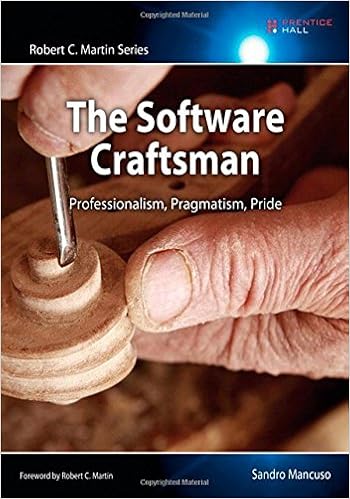
The book itself is split into 2 very distinct sections. One on "Attitude and Ideology" and the other on "Full Transformation" which discusses the fallacies in Job Descriptions and Interviews and the challenges of dealing with morale problems. I found myself aghast at the frankness of the author as he talks about the challenges of clock watching developers and other topics that not many people talk about but most of us deal with. Other topics which get touched on are terrible interviews, terrible job descriptions, reluctance to change, intellectual bullying or terrorism by individuals and how to counter it and many more.
It would take too long to go deep into everything this book talks about and achieves so I'll just try and hit the hight points to me and recommend that you take the time to pick it up yourself.
Caring for your work. Pragmatism.
The running theme of this book is about embracing and owning your career. It's about not thinking about the next two years but more where you think you want to develop yourself long-term and looking to realise that through challenging yourself to make progress towards that. It talks about moving jobs to round out experience in different technologies or working environments or to work with different mentors with differing styles.The book attempts to provide a core set of values or manifesto that are not linked to working processes or technologies. Essentially to me the message is keep an open mind, learn and adapt and never tire of looking for ways to improve your ability.
Always improving yourself or Owning your Career
This talks about the ways to keep your skills sharp but also for taking the responsibility to do that in your own time. I love where I work, we have access to many resources to learn and also the ability for training and taking time out of our working days to learn new things. I cannot stress how lucky I feel to be able to do that. I also know from personal experience and also from interviewing external candidates that it's very easy to get into a very difficult situation were the work is dry and you are not encouraged to really divert your attention from the mechanical execution processes that are expected of you. If you feel like you might be in a similar place to that and want to find a way to get out of it then I honestly think this book has some direction (also check out this really nice blog post from StackExchange). This book has practical advice including book reviews and a way to understand which books are going to add the most value. It references Kata's, a new concept to me, as a way of improving or learning new languages. The overall message is strong though, if this is important to you then make time and get yourself out of your comfort zone.
Culture of Learning and Driving Technical Change
Two of the hardest things to do within an organization. Fostering a culture of learning and bringing other employees along with you is tackled with such gusto that it really does makeyou believe it's possible. That's something that's very close to my heart and again the strength of conviction in this book makes you want to re-up your efforts. The important point that's
made is do it for yourself and be open to talk to people about it. You'll find like minded people will be attracted to join in. Trying to enforce adoption isn't going to work. It removes
value from the group if people are there because they have to be. Recently in work as well as us getting the technical blog up and running again there has been a big take up in
brown bag sessions and people wanting to talk at them. I had hoped to start a book club this year but instead I'm going to take the advice of this book and just talk the back legs of anyone
who gets near me about things I've read about or found interesting and encourage them.
Any Negatives?
One thing I have found difficult to ratify with myself is the description or perception of management and managers. Initially on reading the book I felt it was definitely a negative slant on it, now I think with time it seems like it's more a statement that the jobs and career paths are drastically different.I don't think the intention was to disparage the role of a technical manager, but I'm loath to attempt to speak for the writer at this time. There are very few references to the potentially positive impacts that technical management can bring and most of the 'management' value that is spoken about I think is product management organizing a backlog for the engineers to execute against. I personally believe that some of the things being discussed around enabling growth and building welcoming cultures with a focus on learning can also be driven from a management position, but then I was always
going to say that right :). The book talks a lot about how developers can communicate with management and others to let them know the importance and value of the craftsman process and
techniques but why can technical managers not also be part of that culture and learn too.
We continually talk about the days of command and control traditional management being dead
but don't seem to value the new approaches around coaching, enablement, insulation and advocacy. Sometimes I feel like the worth of that function is under-appreciated and all that is wanted these days is the much fabled 'servitude management' and essentially for managers to just get out of the bloody way. The message and principles of this book are too important to simply reside within the development organization and to me it's similar to a single department 'doing agile' because it will be met with confusion by other stakeholders.
Summary
That said I think this is an important book for any developer especially anyone starting out on the road of their career. Sandro references some texts which he believes to transcend individual technology choices and hit to the very heart of what it is to be an excellent software developer. I think his own book belongs in that group. I really can't stress that enough I think this book is up there with "Clean Code" and others as books which I wish I had read sooner.Things I've taken from this Book
- It inspired me to pick up the blog and set the resolutions I did- It's caused me to have a frank self-evaluation of my abilities and my career
- I had no knowledge of software kata's before having only really knowledge of the 'kanban flavour' (This Slide Deck describes it this is an excellent link btw so if you have time well worth a visit)
Friday, 1 January 2016
New Years Resolutions 2016
So I've been shocking at this blog thing. There's no escaping that but I made a decision last week that this year would be a year of me actually being a real community member as a software engineer. To try and keep me on the right track I decided to basically have some career resolutions but framed up nicely for the calendar year.
The last time I really engaged with the idea of the blog was when I was feeling pretty isolated working as a Buld Release Engineer and trying to foster a DevOps culture in the office. For a reasonable period of that time I was a singleton role in the office (with lovely colleagues in Boston of course) and I think that really led for me to try and reach out and talk to people. I was also absolutely head over heels in love with Chef (I still am sorry) and couldn't shut up about it. I think it accounts for like 90% of my stack overflow interactions as well.
I decided that hell I'm still pretty passionate about software engineering and a lot of the people and technologies I work with so with that in mind lets get straight into the resolutions
This isn't a full new year means new me type deal but rather just taking a few further steps to get out there and broaden my horizons.
The last time I really engaged with the idea of the blog was when I was feeling pretty isolated working as a Buld Release Engineer and trying to foster a DevOps culture in the office. For a reasonable period of that time I was a singleton role in the office (with lovely colleagues in Boston of course) and I think that really led for me to try and reach out and talk to people. I was also absolutely head over heels in love with Chef (I still am sorry) and couldn't shut up about it. I think it accounts for like 90% of my stack overflow interactions as well.
I decided that hell I'm still pretty passionate about software engineering and a lot of the people and technologies I work with so with that in mind lets get straight into the resolutions
The Resolutions
1) Blog at least 12 times
For someone with none in 3 years this may seem ambitious but I have come to realise that the career move I have made into Engineering management in the past year is of interest to people especially because I know I personally have struggled with many parts of that move and not being that individual technical contributor in the same way. Also I'm managing a specialist team in an area I have little experience (UI Development) and there my crutch of having exposure to technologies and challenges isn't there that can be quite scary and exposing like when you forgot your towel and need to dash from the bathroom to get one knowing full well the curtains aren't closed (quick shout out to anyone who has copped such an eyeful whilst walking in Hillsborough park)
I don't think those struggles are uncommon but there's a lot that can be said on the role of a manager whilst wanting to have autonomous empowered teams.
Also as I was part of the effort to found a technology blog at work this year it's a little shabby that I don't really have a personal blog.
2) Read 12 books related to my job
This effort has been partly inspired by a book I'm currently reading called The Software Craftsman by Sandro Mancuso
I am lucky enough to work somewhere that has a subscription to safari online so access to a lot of titles shouldn't be an issue.
Some of the books may have a management or soft skills slant as well but the aim is 12 books with some relevance to a career in software development.
I really want to introduce a book club in work this year so I'm hoping to start small and get a few colleagues interested in specific books.
Take 12 online courses
So there are so many excellent resources for free courses that this should be readily doable.
Mainly I'll be looking to do something I've mo experience in rather than brushing up on anything currently.
I have experience with a number of the providers including edx (functional and saas) to pluralsight (not free but luckily my work has some accounts). This will probably be a mix of shorter technology specific courses to some more building block pieces like those from edx.
I think there's a real embarrassment of riches when it comes to online courses at the minute so I'm going to me a concerted effort to fill my boots this year.
I'm quite weak on front end technologies so that's of particular interest.
Make 12 contributions to the open source community
The hard one. I use a lot of open source software and yet my contribution back has been poor. I'm not alone on that front and I know there's a lot of people who like me are willing but maybe unsure as to where to start?
That's what I'm going to find the toughest but I'm going to try and use it as an opportunity to help out, support projects I like and also develop some of my own skills as I do it. For example I've written a few pet projects in go but I'm very much a newbie at it so I'm hoping to get to the point of being able to contribute to some go projects this year. It's unlikely that I'll get a chance to use it professionally this year so this seems like a win win scenario.
Hopefully no one that's seen my code is reading this as otherwise they may say the most noble contribution I can make is standing back and making a financial contribution ; )
Take part in 12 community events
So this is meet ups and conferences and tech talks and hackathons and all that goodness. I dabble a bit but not very often. I went to the Lead Dev Conference with a colleague (Blog post he wrote about it here) and was part of a resilience tech talk last year in Belfast. I keep circling local events and then making excuses not to go and that's pretty short sighted as normally when I do go I really enjoy hearing other people's war stories of using certain tools or facing certain issues.
Software can be quite an isolating place to work until you realise that there is a whole community of people who get excited about the same things.
Getting Started
So if anyone has any suggestions on any of the above sections or would like to get involved too let me know. You can also catch me on Twitter on @DundrumMuscles
I should also make a resolution to have a prettier blog as well
Subscribe to:
Posts (Atom)